K12 Movie Guides
The Civil Rights Film Studies Unit | Movie Analysis | Cinematography
The Civil Rights Film Studies Unit | Movie Analysis | Cinematography
Couldn't load pickup availability
Classroom Use at a Glance
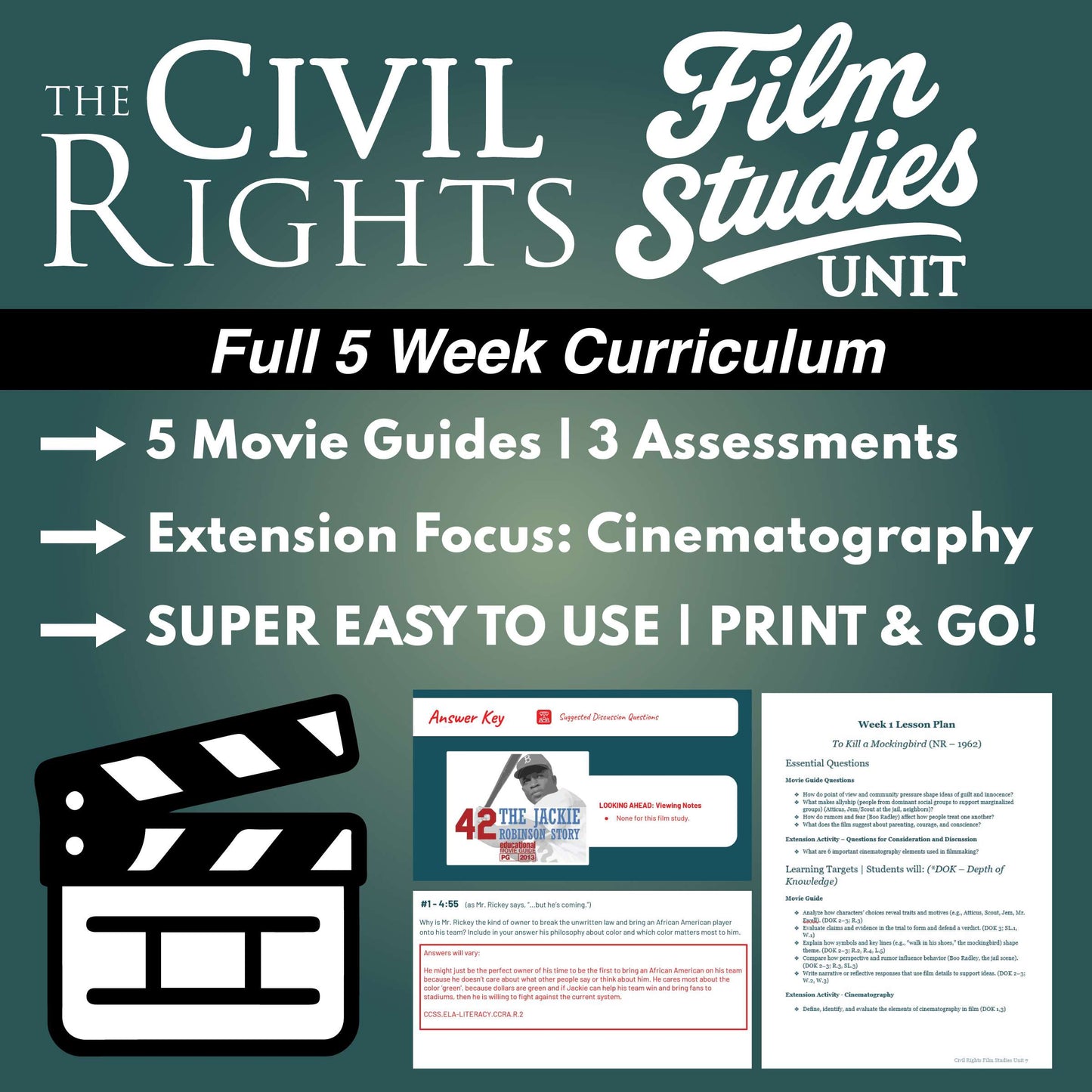
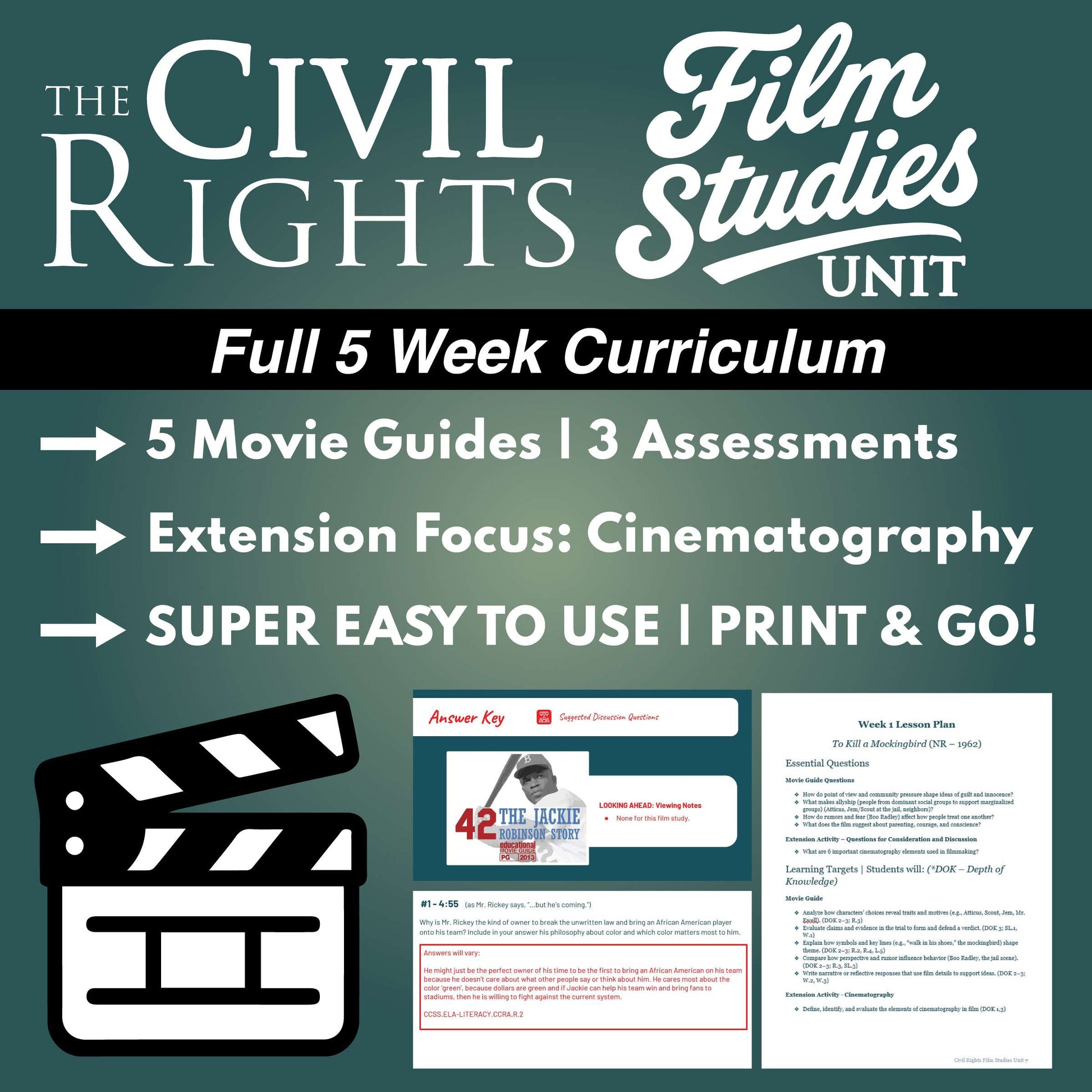
Civil Rights Film Studies Unit with five films, movie guides, cinematography extension, comparative analyses, and a three-part summative assessment.
- Resource type
- Film Studies Unit
- Grade band
- Grades 9–12
- Time required
- Five-Week Unit
- Prep level
- Curriculum Planning
- Classroom use
- Film Studies Unit Social Studies Extension Civil Rights Discussion Evidence-Based Writing Film Analysis Cinematography Analysis Assessment
- Includes
- Movie Guides Cinematography Extension Comparative Analyses Summative Assessment Lesson Plan Answer Key Permission Slip
- Tech format
- Printable PDF Editable DOCX Google Docs PPTX Google Classroom Ready ZIP File
The Civil Rights Film Studies Unit brings five weeks of movies and vibrant, evidence-based discussion into your civil-rights curriculum. This stand-alone unit pairs five classroom-friendly films with structured Movie Guides, a spiraled Cinematography Extension, two Comparative Analyses, and a three-part Summative Assessment.
Students analyze change through four levers—law/courts, workplace/school policy, team/community culture, and operations/logistics—while learning how film craft (framing, lighting, sound, editing) guides audience empathy and judgments about power.
Who it’s for:
- Film Studies/Movie Analysis/Film as Literature Elective Classes
- ELA teachers building argument writing and close-reading of film as text
- Social Studies/History/Civics/Civil Rights courses seeking a rigorous, discussion-rich alternative to textbook-only units
- Mixed-readiness groups (clear scaffolds, concrete prompts, short yet meaningful writing tasks)
What’s Included (teacher-ready & customizable)
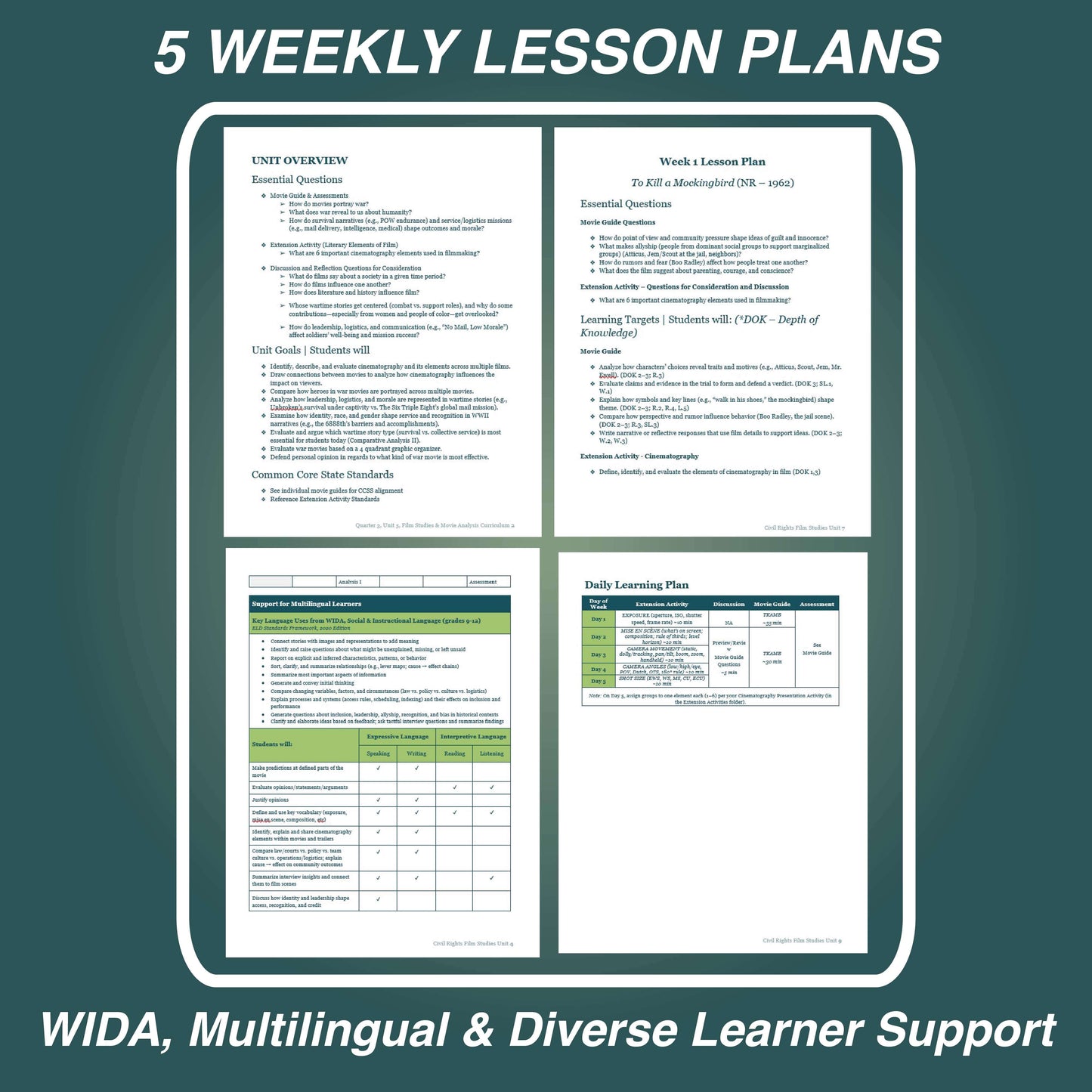
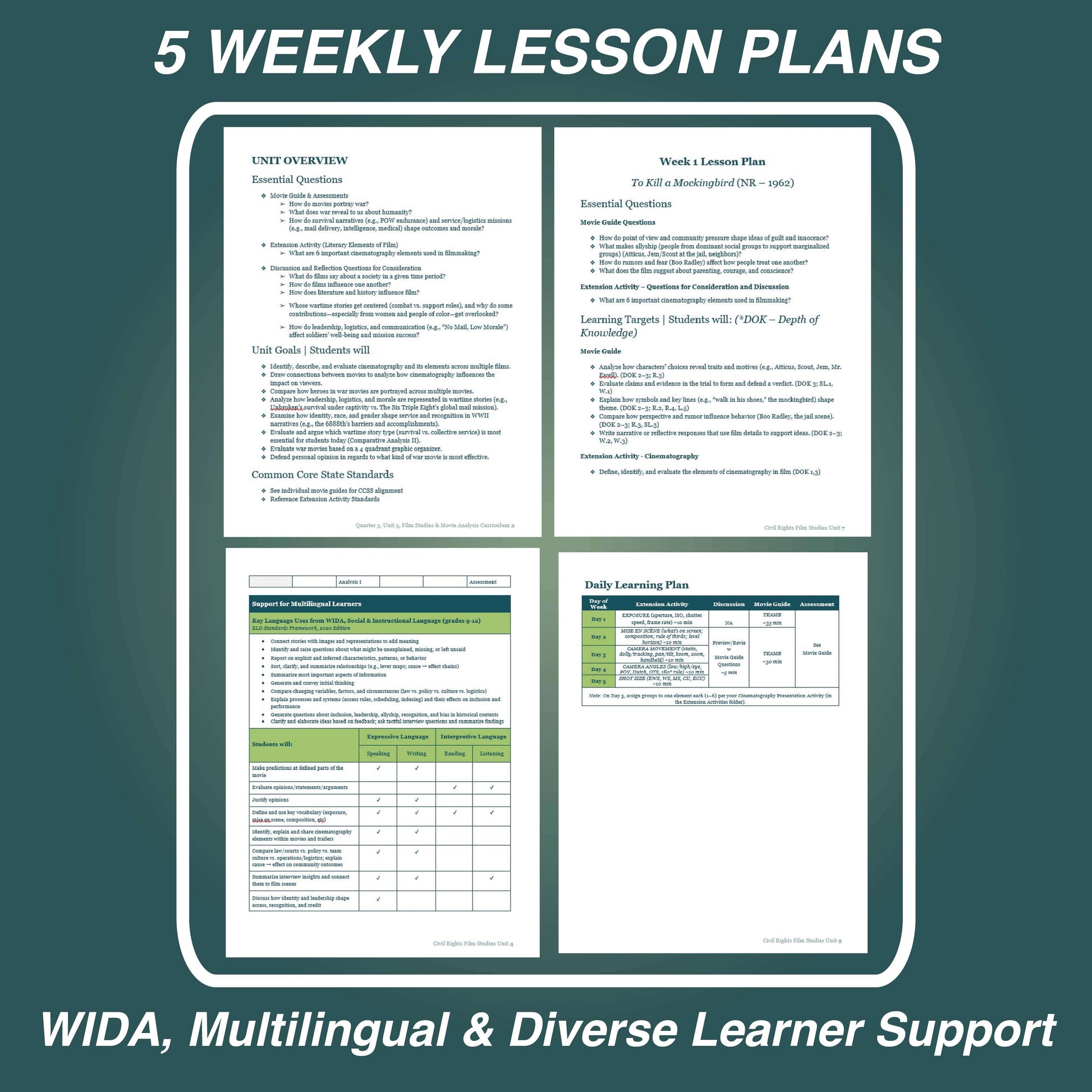
- Weekly Lesson Plans (Weeks 1–5) aligned to each film’s Movie Guide (student copy + answer key)
- Educator's Planning Guide (See sneak peek in the preview file)
- At a Glance for Students (Doc and Slides Version)
- Movie Parental Guide and Permission Slip
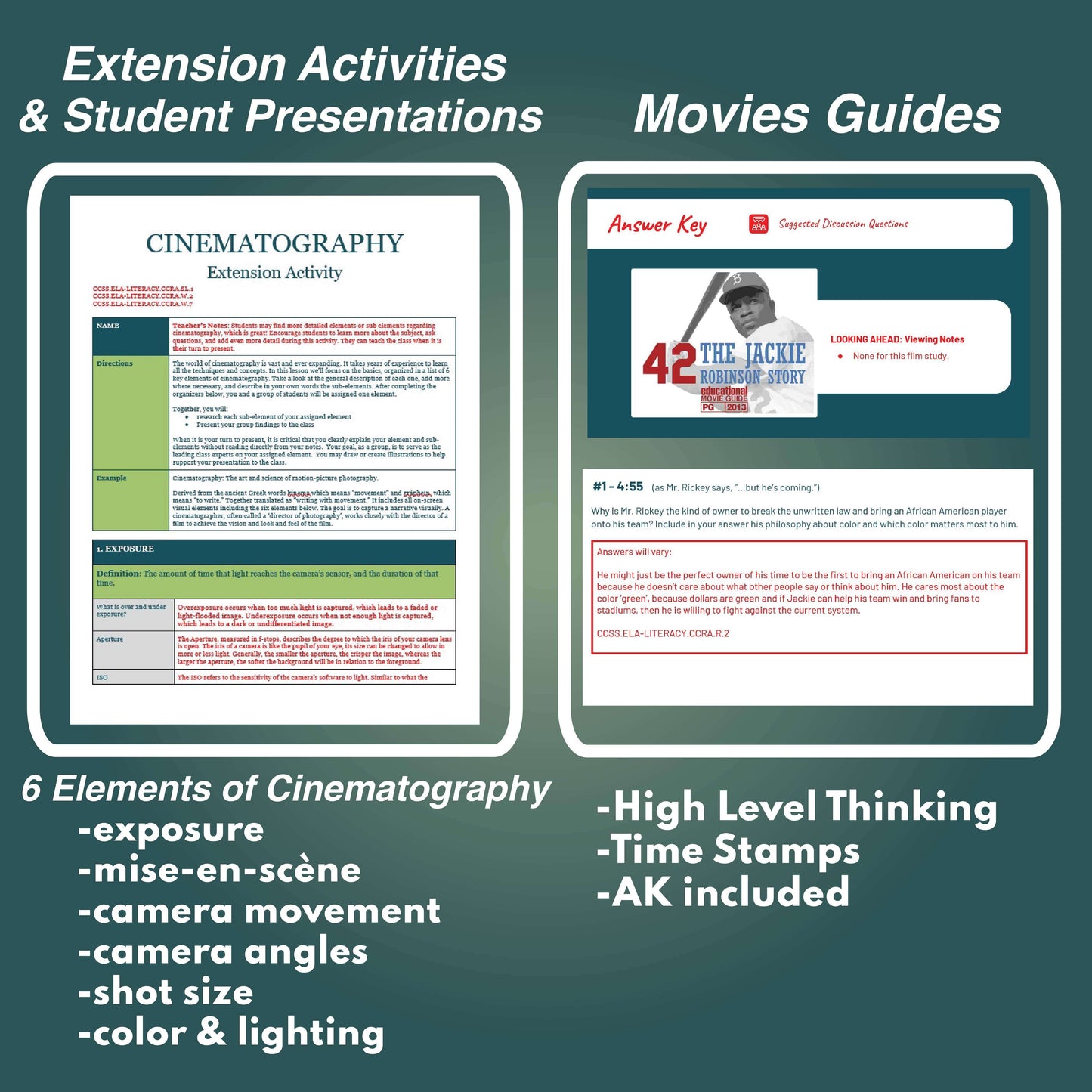
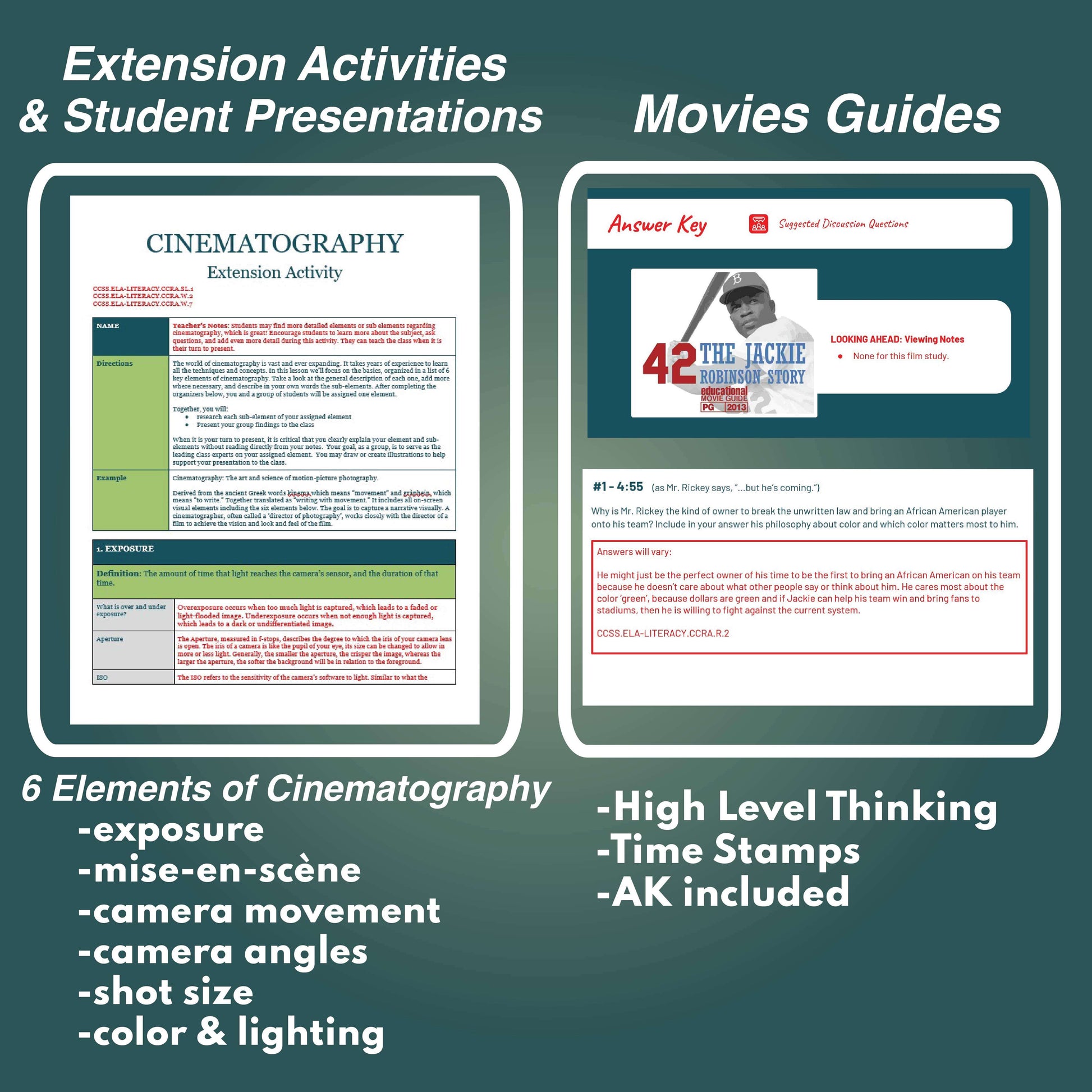
- Cinematography Extension (6 core elements): learn in Weeks 1–2; student presentations in Weeks 3–5
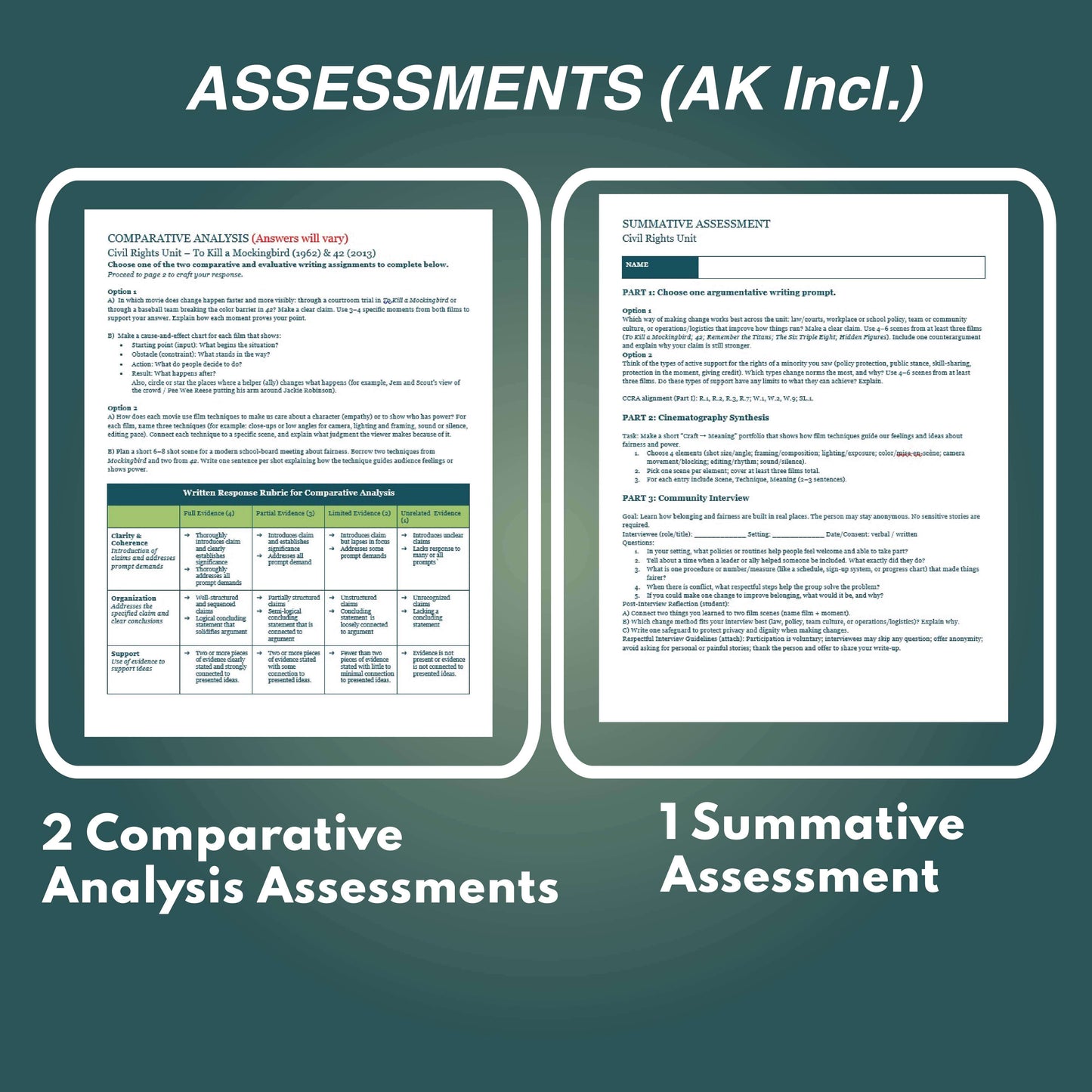
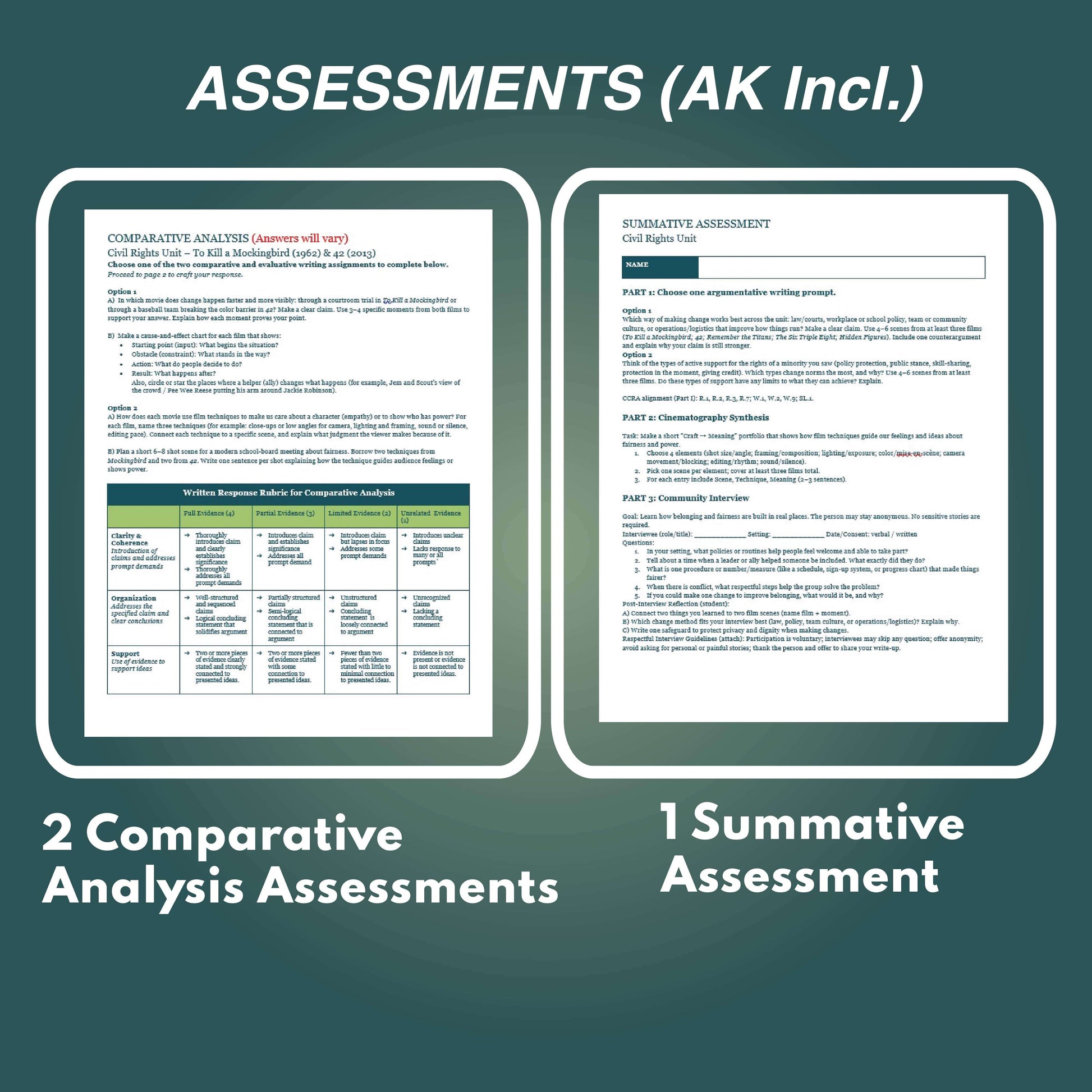
- Comparative Analysis I (end of Week 2): To Kill a Mockingbird & 42 (lever maps + argument)
- Comparative Analysis II (end of Week 4): Remember the Titans & The Six Triple Eight (values-first vs. process-first change
- Summative Assessment (Week 5): Part I argument; Part II Craft → Meaning portfolio; Part III Community Interview (tactful, consent-based)
- Language supports for multilingual learners (sentence frames, precise vocabulary lists, talk moves)
- Differentiation toolkit (choice of organizers, presentation scaffolds, discussion icons)
Standards:
Targets CCSS Anchor Standards across Reading (R.1–R.7), Writing (W.1–W.9), Speaking & Listening (SL.1–SL.3), and Language (L.4–L.5). Each guide/assessment calls out the specific anchors used.
Weekly Outline (5 weeks)
- Week 1 — To Kill a Mockingbird (PG, 1962) Courts, conscience, and community bias; how a verdict can reveal norms more than it changes them; craft choices that build empathy for testimony and fairness.
- Week 2 — 42 (PG-13, 2013) - Workplace policy + public stance; allyship on and off the field; how visible actions (Rickey’s decision, Reese’s gesture) and media attention shift expectations.
- Week 3 — Remember the Titans (PG, 2000) Team culture and leadership; rules, rituals, and accountability that turn rivals into one unit; music and montage as “unity engines.”
- Week 4 — The Six Triple Eight (PG-13, 2024) Operations/logistics as change: indexing systems, 24/7 shifts, and measurable outcomes (“No Mail, Low Morale”) that force institutional recognition.
- Week 5 — Hidden Figures (PG, 2016) Policy access + technical literacy; who gets into the briefing room and why it matters; how cinematography highlights dignity, precision, and momentum toward inclusion.
Assessments:
- CA I (Wk 2): Which lever (law, policy, culture, logistics) moves norms more effectively in Mockingbird vs. 42? Include lever maps and counterclaims.
- CA II (Wk 4): Compare values-first team culture (Titans) vs. process-first logistics (Six Triple Eight); present a clear cause→effect chain and evidence table.
Summative (Wk 5):
- Part I: Argument (choose lever or allyship typology; include counterargument).
- Part II: Craft → Meaning mini-portfolio (4 techniques; ≥3 films).
- Part III: Community Interview on belonging/fair processes with dignity safeguards; connect insights to unit scenes.
Cinematography Extension (spiraled)
- Weeks 1–2: Learn 6 elements — Exposure, Mise en scène, Camera Movement, Camera Angles, Shot Size, Color & Lighting — through quick demos + guided identification in current films.
- Weeks 3–5: Short student presentations with peer feedback; presenters become the “class experts,” applying craft terms accurately to scenes.
Implementation & Film Availability
- Films are not included (copyright). Teachers secure access through school/district channels.
- Finding films (tips):
- Ask your school librarian or district media center about DVD collections, interlibrary loan, or classroom streaming licenses.
- Many public libraries provide free streaming with a library card; check local options.
- Commercial platforms (e.g., Netflix, Disney+, Amazon Prime Video) may have titles available to rent or stream. Catalogs change—always verify availability the week before and day of your showing, and keep a backup plan (alternate clip set or second-choice title).
- Accessibility: Turn on captions/closed captions; offer vocabulary sheets; seat students for best audio/visual access.
Why it works in ELA and Social Studies
- ELA: argument writing with counterclaims, close “reading” of film, structured comparative analysis, and domain vocabulary.
- Social Studies/Civics/Civil Rights: concrete case studies of law, policy, culture, and logistics working together; respectful community-interview practice; connections to primary/secondary context where appropriate.
Time & Pacing
- Designed for 5 weeks of ~45-minute periods. Each day blends a 10-minute craft mini-lesson/presentation, a 5-minute connection to prompts, and ~30–35 minutes of guided viewing/discussion.
- Flex pacing notes are embedded in weekly plans (e.g., trimming the longest guide items on CA weeks).
Digital or Print—your choice
- Digital workflow: Turn on Drive › Settings › “Convert uploads to Google Docs editor format,” then drag in the folder. Docs/Slides are ready for Classroom.
- Print workflow: DOCX and PPTX files are classroom-ready; print slide decks via File → Print → Handouts → 2 per page.
Does K12MovieGuides offer two full Film Elective Curriculum Options?
Yes! Read below to find out which one is best for your needs:
-
Film Studies & Movie Analysis: a plug-and-play film curriculum that every class can access?
- This is a lighter, more accessible companion to our original program—built for introductory learners and mixed-readiness classes. It uses mainstream, easy-to-stream films available on the big three platforms (Disney+ / Netflix / Amazon Prime Video) with strong subtitles for accessibility.
- Audience: Grades 9–12 general ELA, newcomers, co-taught classes.
- Content: School-friendly slate (mostly G–PG-13), with only two R-rated titles
- Scope: 36 movie guides, one simple schedule (no alternates to juggle), streamlined comparative tasks.
- Standards: Hits core CCSS strands while keeping cognitive load manageable.
-
Film as Literature & Cinematic Arts: a deep-dive, university-prep experience with canonical titles.
- This is designed for college-level or highly skilled high school students who thrive on challenging texts and seminar-style analysis. It features more mature, gold-standard films widely recognized for film-study rigor.
- Audience: Honors, AP bridge, dual-enrollment, advanced electives.
- Content: Heavier themes and academic film language; titles chosen for canonical significance and depth.
- Scope: 45 movie guides (vs. 36 in the other edition), with alternate schedules and assessments to support varied pacing and deeper comparative work.
- Outcomes: Extended research, richer theory/application, and sustained argumentative writing—ideal for students aiming at college-level analysis.
Share